
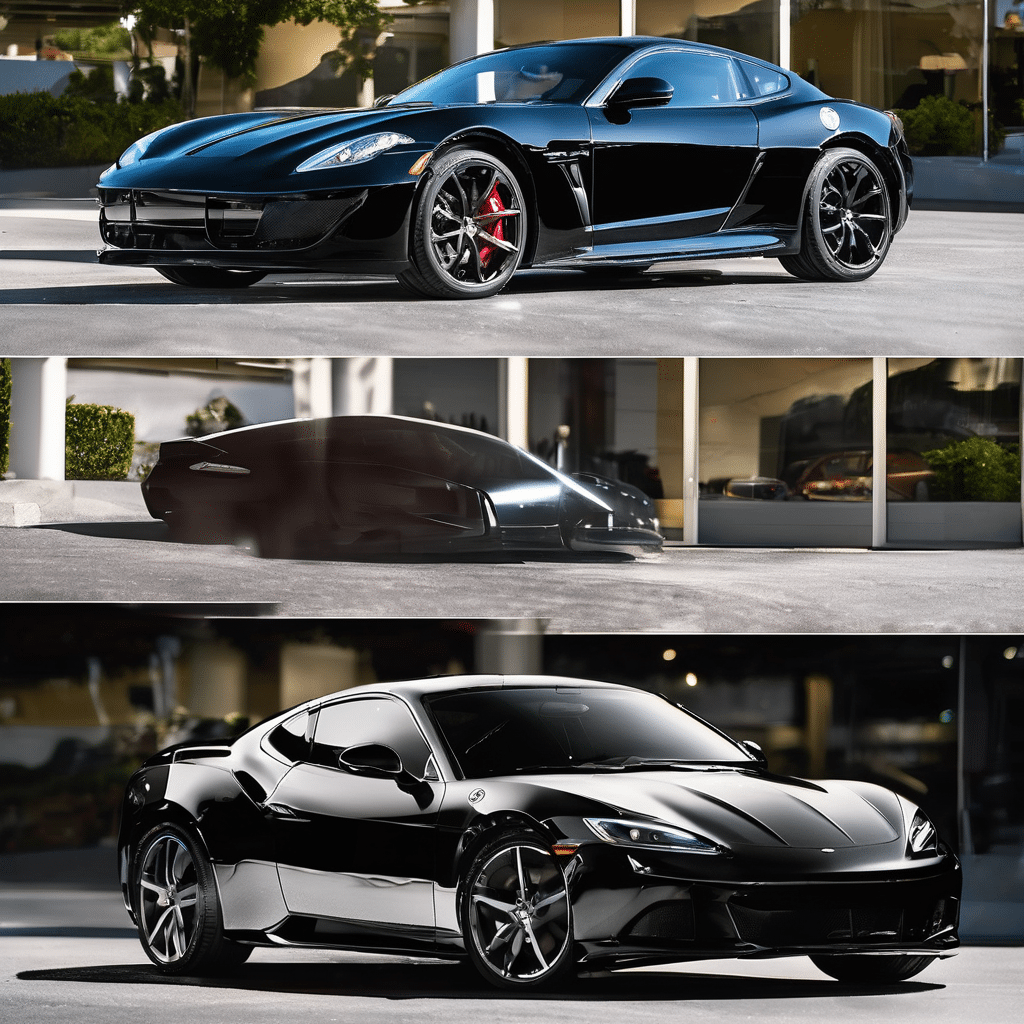
Are you confused about the terms paint correction and car polishing when it comes to maintaining your vehicle's appearance?
You're not alone.
Many car enthusiasts and owners often use these terms interchangeably without understanding the distinct differences between them.
Understanding Paint Correction
Paint correction is a detailed process aimed at restoring and rejuvenating the paintwork of a vehicle by eliminating surface imperfections.
These imperfections include swirl marks, fine scratches, oxidation, and etching caused by bird droppings or water spots.
The goal is to ultimately bring back the vehicle’s original sheen and reflectivity.
The Process of Paint Correction
Unlike a simple polish, paint correction is a meticulous, multi-step procedure.
First, the car is thoroughly washed and clayed to remove all surface contaminants.
This allows detailers to work on a clean surface.
- Washing: Removes dirt and grime from the surface.
- Claying: Eliminates embedded contaminants that a wash can't remove.
Once clean, a detailer employs machine polishers along with graded pads and products to methodically eliminate paint imperfections.
The process often involves compounding and refining stages to achieve the best finish.
Compounding uses a more abrasive product to cut into the surface to remove deeper defects.
Refining or polishing follows, using less abrasive products for a smooth and glossy finish.
Benefits of Paint Correction
The results of paint correction can be truly transformative.
A vehicle with corrected paint can look nearly new, significantly enhancing its value and appeal.
Moreover, by addressing imperfections, you prevent further degradation of the paint that could lead to costly repairs.
Although the process is intensive, the results last long if the vehicle is maintained correctly.
Diving into Car Polishing
Car polishing, while often mistaken for paint correction, is actually just one part of the correction process.
It involves using abrasive products to smooth out and refine the paint surface.
Typically, polishing is not as intensive as paint correction and doesn't always address deeper scratches or more serious paint defects.
The Polishing Process
During polishing, different grades of polishers—from mild to more abrasive—are used depending on the condition of the paint.
- Mild Polishing: Used for light surface imperfections and adding gloss.
- Medium to Heavy Polishing: Tackles deeper scratches but isn't as effective as full paint correction.
Polishers can be applied by hand for small areas or by machine for a more consistent finish.
The result is a smoother surface and improved shine, but it might not last as long as comprehensive paint correction.
When to Choose Car Polishing
Car polishing is ideal for vehicles looking for cost-effective enhancement of their exterior without delving into more aggressive techniques.
It’s perfect for owners who want a quick refresh of their vehicle’s appearance, perhaps before a special event or simply as routine maintenance.
It's also utilized as a maintenance step between full paint correction sessions.
Choosing Between Paint Correction and Car Polishing
The decision between paint correction and car polishing largely depends on the condition of your vehicle’s paint and what you're hoping to achieve.
If your car paint is marred with significant defects, dullness, or you desire a showroom finish, paint correction may be the necessary route.
On the other hand, if your paint has only light imperfections and you seek an enhanced gloss, then car polishing is a more budget-friendly option.
Consider Your Vehicle's Condition
Assessing the current state of your car’s paint is crucial.
If you're unsure, consulting a professional detailer can provide a precise evaluation and suggestion on the most suitable service.
Professionals are trained to identify the specific needs of your car’s paint and recommend the appropriate steps to achieve desired results.
It’s important to remember that the skill, expertise, and tools used by the detailer greatly influence the outcome of both processes.
The Part of Detailers in Paint Care
Professional detailers in Australia play a crucial role in executing both car polishing and paint correction effectively.
These experts not only treat the imperfections but also craft an ongoing maintenance plan to preserve the condition of the car’s paint.
Australian detailers are equipped with the latest tools and products designed to protect paint surfaces from the harsh environmental conditions common in the region, such as strong UV rays and salt from coastal areas.
Enhancing Service with Modern Technology
Incorporating advanced polishing machines and safer, more effective products, professionals now offer services that are not only faster but result in even better finishes.
Detailers can deliver a comprehensive service package that addresses specific paint issues while enhancing the overall aesthetic of the car.
Furthermore, by employing eco-friendly products, Australian detailers ensure that your car looks great while being gentle on the environment, representing a win-win for both the car and the planet.
In summary, understanding the differences between paint correction and car polishing is vital for any vehicle owner.
Both techniques offer unique benefits and are applicable in different scenarios.
By choosing the right service, you ensure the longevity and pristine appearance of your vehicle.
Ensuring a consultation with a skilled professional gives you confidence that your car's appearance is in expert hands.
In the end, it’s about preserving and enjoying the beauty of your vehicle for years to come.
Compare detailing options before asking for a quote
After checking typical price factors, browse local detailers and compare services, location, packages and availability.
Leave a Reply